IPC360 Home
- 2.8
- Rating
- 1.00M
- Installs
- Free
- Price

 Analysis by App-foxy
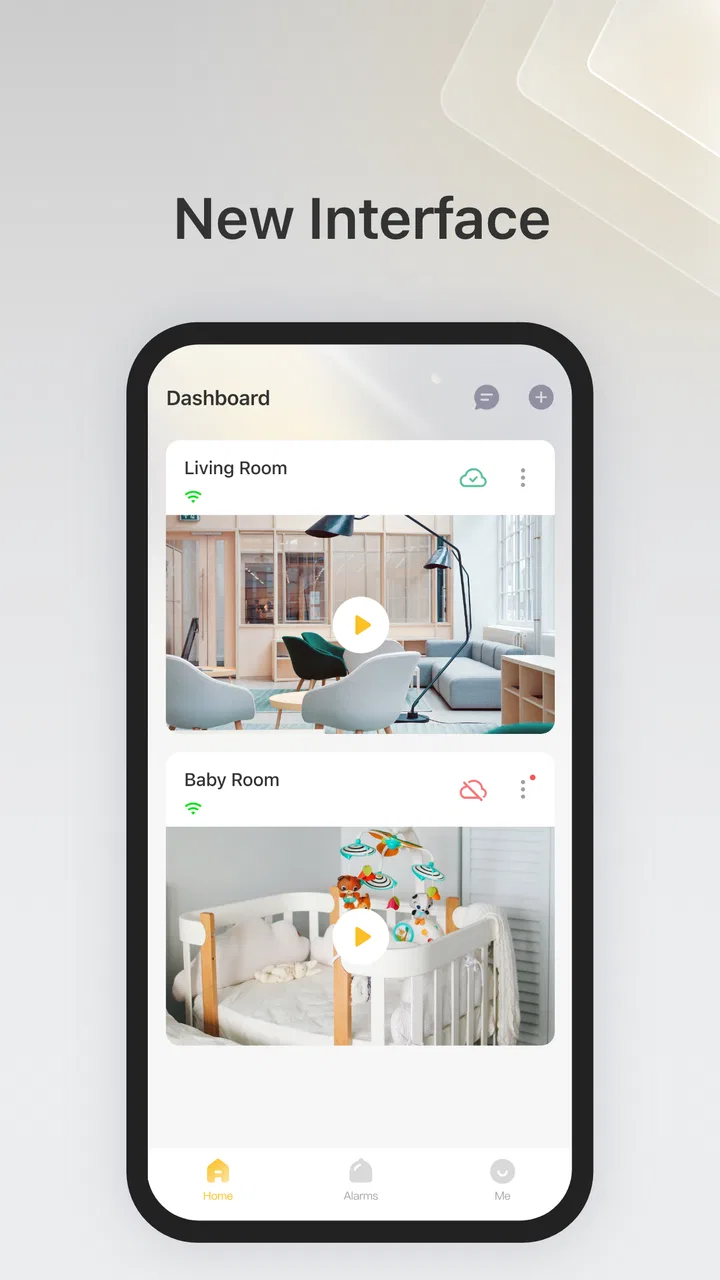
IPC360 Home is the kind of app I would judge less like a traditional video editor and more like a remote viewing tool that happens to sit in the video category. Developed by Puwell Technology Inc, it is built around panoramic camera use in a family setting, so the important question is not whether it has flashy editing controls. The real question is how comfortably it lets you check what matters when you are away from home, moving between networks, or trying to keep an eye on a familiar space from a phone.
My experience with it is best described as practical but dependent on the quality of the connection around it. When the camera and phone communicate smoothly, the wide-angle view can make a room feel easier to understand than a narrow fixed image. When the network is slow or unstable, however, the whole experience becomes less reassuring. A camera app has to earn trust during ordinary moments and stressful ones, and that makes loading time, reconnection, and clear status information just as important as the picture itself.
How connectivity shapes the everyday experience
I find connectivity is the quiet partner in every camera check: a smooth link makes the routine feel simple, while a delay can leave me unsure what the screen is telling me. Before relying on it away from home, I would test the same view on the connections I actually use and note which one recovers most predictably. That leads to a practical question: how does the app fit into the rest of a household’s routine?
You May Also Like

 Blood Strike: 2.5 Anniversary
Blood Strike’s Loadouts Turn Every Drop Into a Tactical Gamble
A close look at Blood Strike’s custom loadouts: how fast access to signature weapons reshapes its battle royale rhythm, rewards preparation, and narrows the gap between fights.

 Pandora - Music & Podcasts
Pandora’s Music Is Easy to Start, but Harder to Recover
Pandora’s strength is its low-effort path from a seed to a station. Its weak spot is how much confidence it asks you to place in connection, setup, and quiet recovery.

 8 Ball Pool
 Is Built on Rivalries, Rematches, and Routine
A close look at the rivalries, rematches, shared routines, and unanswered safety questions that turn a quick pool match into a persistent mobile community.

 Samsung Music
’s Quiet Strength Is Playing What You Already Own
Its reach comes less from spectacle than from dependable access to a personal library. That simplicity is both the app’s strongest retention engine and its ceiling.

 AccuWeather: Weather Radar
AccuWeather Review: A Quick, Clear Forecast for Everyday Decisions
For everyday plans, the best forecast is the one you can understand quickly. AccuWeather makes rain timing, radar, and local conditions easy to act on, with a few trade-offs.

 Hill Climb Racing
Why Hill Climb Racing Still Turns Crashes Into One More Run
A tiny car, a bumpy hill and one more upgrade: Hill Climb Racing keeps resurfacing because its simple chaos makes every near-miss feel personal.
More From Our News Desk



Useful when a quick remote check is enough
The strongest use case is simple: I want to look at a familiar place without being there. That might mean checking a living room while visiting relatives, seeing whether a child has returned home, or taking a quick look at a room before calling someone nearby. The panoramic approach is useful here because I do not have to rely on a very narrow slice of the scene. A broader view can reduce the need to constantly reposition the camera, especially when the room contains several areas worth checking.
That convenience should not be confused with complete reliability. The app is only helpful if the camera is reachable and the phone can maintain communication with it. In a strong home connection, opening the app and getting a view feels direct. On a congested mobile connection, the same action can feel uncertain, with the user wondering whether the camera is unavailable, the phone is struggling, or the connection is simply taking its time.
This is why I would not install IPC360 Home merely because I want a general video app. Its purpose is much narrower and more specific. It makes sense for someone who already has a compatible panoramic camera and wants a mobile way to interact with that setup. It is less compelling for a person looking for a conventional editor, a social video tool, or a player for locally stored clips.
The difference between seeing a room and understanding it
A wide view is not automatically a better view. Panoramic coverage can help me notice where activity is happening, but the image may require more attention than a tightly framed camera feed. If I am checking a small detail, the broad scene may not be enough on its own. I may need to inspect the display carefully, adjust my expectations, or use whatever viewing controls the camera setup makes available.
That trade-off matters in family use. A parent checking a play area may value coverage over detail, while someone trying to identify a small object may prefer a more focused camera. I would decide based on the room and the purpose rather than assuming the panoramic format solves every viewing problem.
What happens when the connection breaks
The most revealing moments are not the successful ones. They are the moments when I move from home Wi-Fi to cellular data, enter a weak-signal building, or reopen the app after the phone has been idle. In those situations, a camera app needs to make recovery feel understandable. If the display remains stuck or the app gives little indication of what is happening, I am left guessing whether I should wait, retry, or inspect the camera itself.
My practical advice is to treat a remote view as a check, not as an emergency communication system. If the situation is important, I would not rely on one glance from a phone. I would also keep a second way to contact the person or household involved. This is not a criticism unique to IPC360 Home; network-dependent viewing always has that limitation. Still, it is especially important here because the app’s value is tied so closely to access at the exact moment I need it.
Recovery habits that save time
When a feed does not appear, I would avoid repeatedly tapping every control at once. First, I would check whether the phone itself has a working connection by opening another service. Then I would retry the camera view once, give it a moment, and only after that consider whether the camera or home network needs attention. This simple order prevents me from treating every delay as an app failure.
Switching between Wi-Fi and mobile data is another useful test. If the view works on one connection but not the other, the problem is more likely related to the network path than to the camera image itself. I would also avoid judging the app from a single failed attempt after the phone has been sitting unused for a long time. The more useful test is whether it recovers consistently across several ordinary situations.
For a family, I would establish a routine before depending on it. Each person who may use the app should know how to open the relevant camera view and what to do if it does not load. A camera system becomes much less frustrating when everyone understands the difference between waiting for a connection and needing someone at home to check the equipment.
Using it while moving around
IPC360 Home is naturally suited to short mobile checks, but that does not mean it is comfortable to use while walking or multitasking. A panoramic feed can encourage me to scan around the scene, and that takes more concentration than glancing at a static notification. I would use it when stopped, especially if I need to inspect several parts of a room.
Travel is another realistic context. If I am staying somewhere else and want to check a home camera, the app can be useful as long as the remote connection is dependable. The experience is less predictable in hotels, public networks, or places where mobile coverage changes frequently. I would test the setup before leaving home rather than discovering during a trip that the viewing routine is awkward.
The app is also more suitable for people who want a direct camera view than for those who want a large amount of video organization on their phone. Its place in the Video Players & Editors category can create the wrong expectation if someone is shopping for trimming, filters, captions, or publishing tools. I would choose a dedicated editor for those jobs and use this app for the camera relationship it was designed around.
A realistic family scenario
Imagine that I am away for the afternoon while a family member is at home. I open the app to check a room, confirm that the scene looks normal, and close it again. That is where the app feels most natural: a brief, purposeful interaction rather than constant viewing. The panoramic perspective may help me orient myself quickly, particularly if the camera covers a wider area than a standard fixed frame.
Now imagine the same check during a weak connection. The image takes longer to appear, and I am unsure whether the room is unchanged or simply not loading. In that case, the app creates less confidence than I wanted. I would try the recovery steps above, but I would not keep refreshing indefinitely. If the check genuinely matters, I would contact someone directly instead of treating a delayed feed as proof of anything.
Keeping mobile data under control
Remote video can consume more mobile data than a quick text-based interaction, so I would be deliberate about when I open the live view. I would avoid leaving it running in the background and would close the viewing screen after answering the question that brought me there. This is especially sensible when travelling or using a limited cellular plan.
A good habit is to use the app for targeted checks rather than passive monitoring. Before opening it, I would decide what I am trying to confirm: whether someone is in the room, whether the space looks normal, or whether I need to call the household. That keeps the session short and makes the app feel more like a practical tool than an always-on window.
I would also pay attention to the phone’s own battery behavior during repeated viewing. Video communication can be demanding, and frequent checks may become inconvenient even when the app itself is working correctly. If I need extended observation, I would plan around power and connectivity rather than assuming the phone can comfortably handle an uninterrupted session.
Privacy is part of the setup
Because this app connects me to a family-oriented camera environment, I would think carefully about who can access the account and where the camera is pointed. The most useful camera position is not always the most private one. I would aim the device at the area that needs checking while avoiding unnecessary coverage of personal spaces.
I would also make sure that everyone in the household understands when the camera may be viewed. Clear expectations matter more than a clever setup. A panoramic image can show more of a room than people realize, so I would periodically review the camera’s position from the same perspective I use on the phone. That small check can reveal whether the view includes more than intended.
For a shared household, I would be cautious about casually handing the phone to visitors while the app is open. A camera feed is not like a normal video clip that has already been recorded for public viewing. It represents a live connection to a private space, and I would treat it accordingly.
Cost and expectations
The app is free to install, which makes trying the mobile experience relatively easy. It carries an Everyone content rating, so its presentation is intended for a broad audience. At the same time, in-app purchases range from $1.99 to $339.99 per item. I would therefore look carefully at any purchase screen before confirming anything, particularly if several family members use the same device or account.
The purchase range is important because “free” does not automatically mean every part of a camera ecosystem has the same cost structure. I would start by determining whether the basic viewing workflow meets my needs before considering an optional purchase. If I only need occasional checks, paying for an advanced service may not make sense. If the camera is central to my household routine, I would compare the value of any paid element with the reliability and controls I actually receive.
What the public response suggests
The app has passed one million installs, but its average rating is 2.8 from around 7,100 ratings and about 402 written reviews. I read that combination as a reason to approach it with realistic expectations rather than assuming the experience will be equally smooth for everyone. A large install base shows that many people have tried the platform, while the modest average suggests that connection behavior, device compatibility, or day-to-day reliability may be decisive factors for some users.
I would not use the rating alone to reject it. Camera apps can feel excellent in one home and frustrating in another because routers, signal strength, phone settings, and camera placement all influence the result. Still, the rating is a useful warning to test the complete routine early: open the view from the places where I normally use it, switch between available connections, and see how easily it recovers after a failed attempt.
Version, device age, and practical compatibility
The current version is 8.10.1.0, and the app requires Android 7.0 or later. That makes the minimum Android requirement worth checking before installation, especially if I am reusing an older phone as a household viewing device. A phone that technically meets the requirement may still offer a less comfortable experience if it has limited battery life, little free storage, or an unreliable network connection.
I would prefer to use a reasonably current phone for regular checks and keep the screen clean enough to inspect a panoramic image without squinting. If another family member uses an older device, I would test the same camera from that device rather than assuming the experience will match mine. A camera platform is only as convenient as the least reliable part of the chain connecting camera, network, account, and phone.
Who should choose it, and who should skip it
I think IPC360 Home is a reasonable fit for someone who already owns a compatible panoramic camera and wants family-oriented remote viewing from an Android phone. It is particularly suitable for short, purposeful checks where a broad room view is more useful than a tightly framed image. People who are comfortable troubleshooting a connection occasionally will probably get more from it than users who expect every viewing session to behave like opening a locally saved video.
I would skip it if my main goal is video editing, social publishing, or managing a large personal media library. A normal editor or gallery app would be a better match for those tasks. I would also be cautious if I need guaranteed access during urgent situations, because the experience depends on connectivity and the camera’s availability. In that case, I would want a broader home-safety plan rather than relying on this app alone.
Compared with a conventional camera viewer, the panoramic perspective is the defining advantage, but it also makes the app more dependent on how well I can interpret a broad scene. Compared with a standard video editor, it is not competing on editing depth at all. The right comparison is therefore not “which app has more tools?” but “which tool best matches the way I need to check this particular space?”
My connectivity verdict
After looking at the complete experience, I see IPC360 Home as a focused companion for a panoramic camera rather than a universal video application. Its value appears during quick remote checks, especially when the wider view helps me understand a room without constant repositioning. Its weakness is equally clear: when the network becomes unreliable, the app’s usefulness can drop at exactly the moment I want reassurance.
I would recommend trying it if the camera setup already fits my home and I am willing to test it from both Wi-Fi and mobile connections. I would keep sessions intentional, watch mobile data, protect the privacy of the camera view, and learn a simple recovery routine before depending on it. The best reason to use IPC360 Home is convenient remote awareness, not guaranteed communication.
For me, that makes it a conditional recommendation. It can be a handy family camera platform when the surrounding network is dependable and the panoramic format suits the room. It is not the app I would choose for editing videos, replacing direct contact, or removing every uncertainty from remote monitoring. If those boundaries match what I need, the free installation makes it worth testing; if they do not, a different kind of video or camera solution would be a better choice.
FAQs for IPC360 Home
01What is IPC360 Home, and what can I use it for?
IPC360 Home is a mobile app designed to connect compatible security cameras and help you monitor your home, office, or another property remotely. After pairing a supported camera, you can typically view live footage, receive motion-related notifications, communicate through two-way audio, and review recordings. Available options depend on your camera model, firmware, storage plan, and regional settings.
02Is IPC360 Home compatible with every security camera?
No. IPC360 Home is intended for specific IPC360-compatible cameras and may not work with devices from other manufacturers or unrelated camera applications. Before downloading, check the camera packaging, user manual, or product listing for the exact app requirement. Compatibility can also depend on your phone’s Android or iOS version, Wi-Fi frequency, and whether the camera requires a particular account or setup method.
03Does IPC360 Home require Wi-Fi or an internet connection?
Yes, an internet connection is generally needed for remote monitoring and cloud-based features. During setup, many compatible cameras must connect to a 2.4 GHz Wi-Fi network, while some models may support additional network options. A stable upload connection is especially important for smooth live video and two-way audio. If your internet connection is weak, streaming may be delayed or disconnected.
04Can I record video and save footage with IPC360 Home?
Recording options vary according to the camera and the storage method it supports. Some devices can save clips to a microSD card, while others may offer cloud recording through a subscription or trial plan. The app may also allow snapshots or manual recordings to be saved on your phone. Check storage limits, subscription costs, overwrite behavior, and privacy terms before relying on it for important footage.
05Is IPC360 Home secure and suitable for monitoring children, pets, or property?
IPC360 Home can be useful for checking rooms, pets, entrances, or other areas, but no connected camera system should be treated as completely risk-free. Use a strong, unique account password, keep the app and camera firmware updated, and avoid sharing access unnecessarily. Review privacy permissions and camera placement carefully, particularly when monitoring private spaces or recording other people.
Pros
- Remote live viewing with smooth video streaming over Wi‑Fi or mobile data.
- Motion alerts help you notice activity around monitored areas quickly.
- Two-way audio lets you communicate with people near the camera.
- Supports multiple cameras for monitoring different rooms or locations.
- Night vision provides usable footage in dark indoor environments.
Cons
- Many useful features require a paid cloud storage subscription.
- Video quality and responsiveness depend heavily on network stability.
- Privacy concerns may arise from cloud-connected cameras and account access.
- The app can send frequent alerts unless motion detection is carefully adjusted.
- Some camera functions may be limited when using third-party storage options.

IPC360 Home
Gallery